Introduction
In the Netherlands, windows and doors do more than close a wall. They shape light, set the rhythm of the façade, and anchor a home in its street. From canal houses with tall panes to crisp modern terraces with slim frames, Dutch architectural windows and design doors Netherlands tell a story of water, wind, and careful planning. For complete house renovations and house extensions, choosing openings is not a detail; it is the design.
Basic concepts
- Kozijn: The window or door frame, a key visual line in brick façades.
- Bovenlicht: A transom window above a door, often with glass-in-lead for daylight and privacy.
- Draai-kiep: Tilt-turn window common in the NL for secure ventilation.
- HR++/triple glazing: High-performance glass used to meet BENG energy targets.
- Schuifpui: Large sliding door connecting living space and tuin, central in extensions.
How windows and doors shape Dutch streets
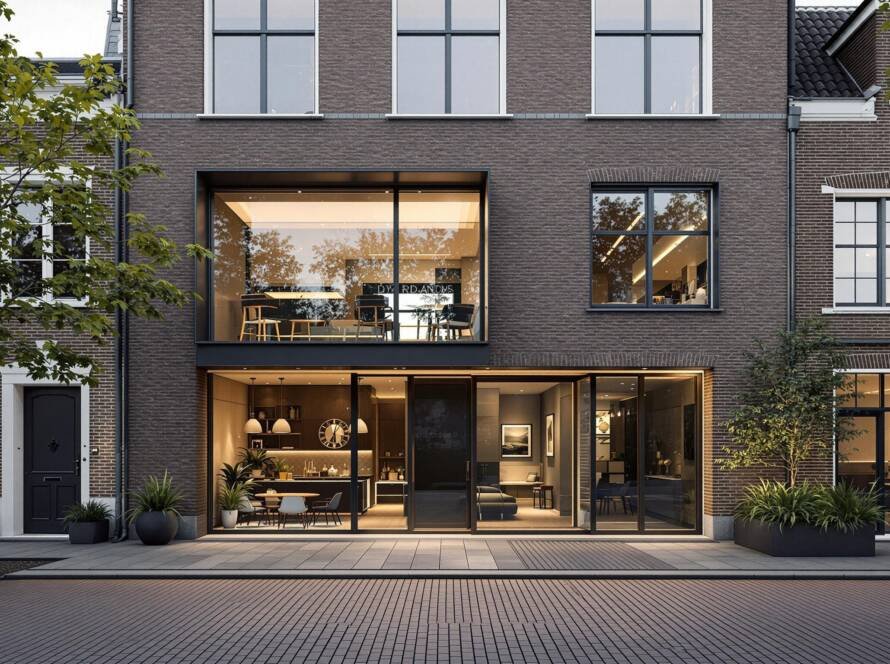
Façade composition in the Netherlands depends on proportion and repetition. Slim vertical windows echo historic trapgevels and keep brickwork dominant. A clear base-middle-top logic—plinth, window band, cornice—gives compact streets their calm. Aesthetic window styles NL respect this rhythm: align head heights, keep reveals consistent, and let the brick bond read cleanly around the kozijnen.
Light is cultural currency. Low skies and long winters make daylight precious, so panes are tall, sills are lean, and bovenlichten pull daylight deep into narrow plans. The architectural beauty windows and doors Netherlands tradition balances this with privacy: frosted lower panes, patterned glass-in-lead, and narrow mullions that filter views without dimming rooms.
Materials and performance without losing beauty
Timber keeps heritage texture and is easy to repair; durable choices like Accoya or FSC hardwood hold paint in a wet, windy climate. Aluminium gives ultra-slim sightlines for big openings; powder coatings resist coastal salt. High-grade uPVC offers low maintenance in suburbs. Glazing choices carry weight: HR++ for efficiency, laminated acoustic glass near tram lines, and solar-control coatings to manage TO-juli overheating risk. Hardware matters too: concealed hinges, marine-grade finishes, and SKG-rated cylinders protect the look and the home.
Windows and doors in extensions and renovations
House extensions often open the rear façade. Use a wide schuifpui to create long sightlines, and pair it with a rooflight to pull sun to the middle of the plan. Keep new frames aligned with existing head and sill levels to avoid a patchwork look. In complete house renovations, retain character elements—slender stiles, a paneled voordeur, or a stained-glass bovenlicht—and pair them with secondary glazing or vacuum glass to hit modern performance without losing detail.
Heritage, permits, and the street conversation
Many Dutch homes sit in areas with welstand rules or monument status. Preserve reveal depths, keep muntin patterns authentic, and match paint colors common to the street—deep green or black doors, white or off-white frames, restrained hardware. The result is quiet façades that age well and keep value.
Door design trends Netherlands
Current door design trends Netherlands favor clean geometry, tactile finishes, and robust thresholds. Pivot entry doors appear on new villas; in terraces, flush-panel doors with a sharp letterplate and a slim pull feel modern yet modest. For gardens, minimal-frame sliders and steel-look doors deliver transparency without visual noise.
Trends in Dutch architectural windows
Dutch architectural windows now lean toward slim profiles, larger clear openings, and warm timber interiors with durable exterior cladding. Circularity rises: refurbish good kozijnen, specify detachable beads, and choose finishes with long repaint cycles. In cities, acoustic performance is as critical as U-value, shaping frame and glass selection.
Practical tips
- Map the façade rhythm; align window heads and sills across old and new parts.
- Choose frame profiles that suit the brick bond; keep reveals consistent and deep enough to cast shadow.
- Target low Uw and Ug values while protecting slim sightlines with warm-edge spacers.
- Control summer heat; integrate external shading, overhangs, or selective coatings on sun-exposed panes.
- Plan accessibility; use flush thresholds at entrances and garden doors with effective drainage.
- Specify acoustic glazing and trickle vents with sound attenuation near busy streets or rails.
- Select corrosion-resistant hardware in coastal zones; prefer marine-grade finishes.
- Respect heritage patterns; keep muntin logic, preserve bovenlichten, and match historic colors.
- Design for maintenance; choose coatings and materials suited to Dutch rain and wind, and allow safe access for cleaning.
- Verify security; use multi-point locks and SKG-rated components without bulky visible parts.
Conclusion
Windows and doors are the Dutch façade’s grammar. They guide light, set proportion, and connect homes to streets and gardens. When planned with care—material, performance, and context aligned—Dutch architectural windows and design doors Netherlands deliver calm beauty that lasts. In extensions and full renovations, let openings lead the design, and the house will feel both unmistakably Dutch and unmistakably yours.