Introduction
Windows and doors seem simple until you try to change them. In the Netherlands, a new frame or a wider opening touches safety, energy, fire, and even neighbor law. Read this before you plan. You will save time, avoid fines, and keep your home comfortable and compliant with Dutch building regulations for windows and doors.
Basic concepts
- Bbl (Building Decree under the Environment and Planning Act): The national rulebook that replaced the old Bouwbesluit. It sets minimum performance for safety, health, energy, and usability.
- Omgevingsvergunning (building permit): A single permit for building, facade changes, and monuments. Many small replacements are permit-free, but not all.
- Welstand/aesthetics: Municipal design rules for what is visible from the street.
- Monument/protected townscape: Stricter consent and materials matching the original character.
- Daylight and ventilation: Minimum fresh air and daylight for habitable rooms must be maintained or improved.
- Safety glass and fall protection: Toughened/laminated glass near floors and barriers for low sills at height.
When do you need a permit?
Door installation laws NL and Dutch building regulations for windows trigger permits based on scope and context. Use this as a compass and confirm locally:
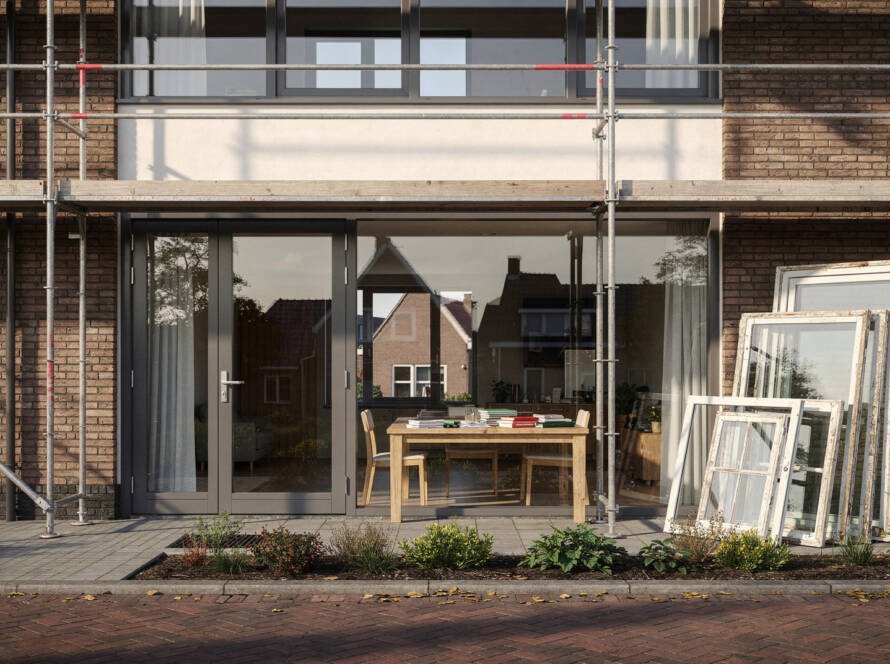
- Likewise replacement, same size, same look: Often permit-free if not a monument and not changing street view.
- Changing facade appearance: New divisions, colors, or materials visible from public space usually require a permit.
- Enlarging openings or altering structure: Almost always permit-required.
- Monuments or protected areas: Permit and heritage approval are typically mandatory.
- Apartment buildings (VvE): Expect owners’ association consent; common facades are shared property.
Technical compliance under Netherlands construction codes
Window and door compliance in the Netherlands is performance-based. Check each of these before you commit to a design:
- Energy performance: Replace glazing and frames with high-efficiency solutions. Aim for HR++ or better to meet current expectations and reduce heat loss. Keep thermal bridges in check and seal joints continuously.
- Ventilation and airtightness: Do not reduce existing ventilation capacity. Retain or add trickle vents where windows are replaced. Balance airtight frames with controlled fresh air to avoid moisture problems.
- Daylight admission: Maintain the minimum daylight area for living rooms and bedrooms. Do not reduce glass size or add deep reveals that starve rooms of light.
- Safety glazing: Use toughened or laminated glass in doors, sidelights, and low-level panes where impact is likely. Treat stairwells and corridors with extra caution.
- Fall protection: If a window’s sill is low and there is a drop outside, add a guard, barrier, or restrictor. Safety beats view.
- Fire safety: Preserve fire-separating elements. Apartment entrance doors to stairwells often require fire resistance and self-closing hardware. Keep escape routes clear and operable.
- Acoustics: Near busy roads or rails, use acoustic glazing and sealed frames to meet interior noise targets.
- Accessibility: For main entrances in applicable dwellings, keep adequate clear width and limit thresholds for ease of access.
- Water and wind tightness: Specify frames and seals that resist Dutch wind-driven rain. Drain sills, flash correctly, and avoid water traps.
- Security: Choose burglary-resistant hardware and multi-point locks that meet recognized Dutch classes.
Property boundaries and shared buildings
- Neighbor privacy: Do not place clear view windows within about two meters of the property boundary that look onto a neighbor’s plot. Use obscure, non-openable glass when close to the line.
- Party walls and facades: On or near the boundary, meet stricter fire and sound separation rules.
- Apartments (VvE): Coordinate designs, colors, and profiles. Uniformity is often required and written into building rules.
Practical tips
- Confirm whether your home is a monument or in a protected area before you design.
- Define the scope precisely: like-for-like replacement, size change, or structural alteration.
- Map all code topics: energy, ventilation, daylight, safety glass, fire, acoustics, and security. Check them as a set, not in isolation.
- Preserve or improve ventilation; plan trickle vents and ensure continuous air paths.
- Document existing performance with photos and dimensions; keep this with your permit file.
- Coordinate early with your municipality on building permits in the Netherlands; align design with local aesthetics.
- Align with your VvE if in an apartment; secure written approval before ordering.
- Select materials fit for Dutch climate: durable timber, aluminum, or uPVC with proper thermal breaks and certified hardware.
- Plan lead times for custom frames, glass, and fire-rated doors; sequence works to keep the building weather-tight.
- Keep records of drawings, product data, and installation notes for future inspections and home resale.
Conclusion
Windows and doors are small elements with big regulatory reach. Treat them as part of the building system. Align your design with Netherlands construction codes, verify permit needs, respect neighbor privacy, and preserve safety, energy, and comfort. Do this, and your project will read as cleanly as good code: simple, robust, and correct the first time—fully compliant with Dutch building regulations for windows and door installation laws NL.