Introduction
In the Netherlands, robust energy-efficiency targets steer many homeowners toward triple glazing. The extraordinary insulation it provides seals off drafts, but without deliberate ventilation, the same tightness traps moisture, odours and carbon dioxide. That freshly renovated home quickly becomes stuffy, compromises indoor air quality, and invites mould. Understanding this link is a cornerstone of every healthy Dutch renovation. This article maps the fundamentals and gives you a clear path to a breathable, comfortable home.
Basic Concepts
Triple glazing consists of three glass panes and two hermetically sealed cavities filled with argon or krypton. Its U‑value often drops below 0.7 W/m²K, slashing heat loss to a fraction of old double glazing. Airtight homes result when the building envelope—walls, roof, floor, and fenestration—is sealed so tightly that uncontrolled air leakage almost stops. Ventilation, by contrast, is the controlled, intentional flow of outdoor air into habitable spaces and the removal of stale air. In the Dutch context, many dwellings built before the 1990s were deliberately leaky, relying on unintended draughts. When they receive high‑performance windows during a Dutch renovation, the forgotten air exchange suddenly disappears.
The Problem of Airtight Homes
Triple glazing improves comfort near windows, but the loss of incidental air change creates a cascade of issues. CO₂ from occupants builds up, causing drowsiness. Water vapour from cooking, showering, and even breathing has nowhere to go; it condenses on the coolest surfaces—often the frames of the new windows, because even the best triple‑glazed unit leaves a thermal bridge at the edge seal. The Dutch climate, with its long damp winters, pushes indoor relative humidity above 70 % for months if the moisture is not mechanically removed. Mould spores colonise walls and furniture, and dust mites thrive. The home feels heavy and unventilated. The very efficiency you invested in becomes a health liability unless you address airflow.
Ventilation Solutions
Three strategies apply, each with different merits for an airtight house:
- Natural ventilation – opening windows or trickle vents. It is unreliable in bad weather, loses heated air instantly, and fails when you are away.
- Mechanical extract ventilation – fans continuously pull air from kitchen, bathroom, and toilet, while background vents above the triple‑glazed windows supply dry outdoor air. This system is common in Dutch homes and is affordable to install. It can, however, cause negative pressure that sucks in cold draughts and dust through any residual leakage.
- Balanced ventilation with heat recovery (HRV) – a supply fan brings filtered fresh air into living spaces and an exhaust fan removes stale air from wet rooms, while a heat exchanger transfers over 85 % of the thermal energy to the incoming stream. Ideal for highly airtight envelopes, it keeps a constant healthy atmosphere without wasting energy. The Dutch Bouwbesluit already requires similar performance in new builds, and it is the natural partner for extensive Dutch renovation with triple‑pane glass.
Matching Ventilation to Triple Glazing
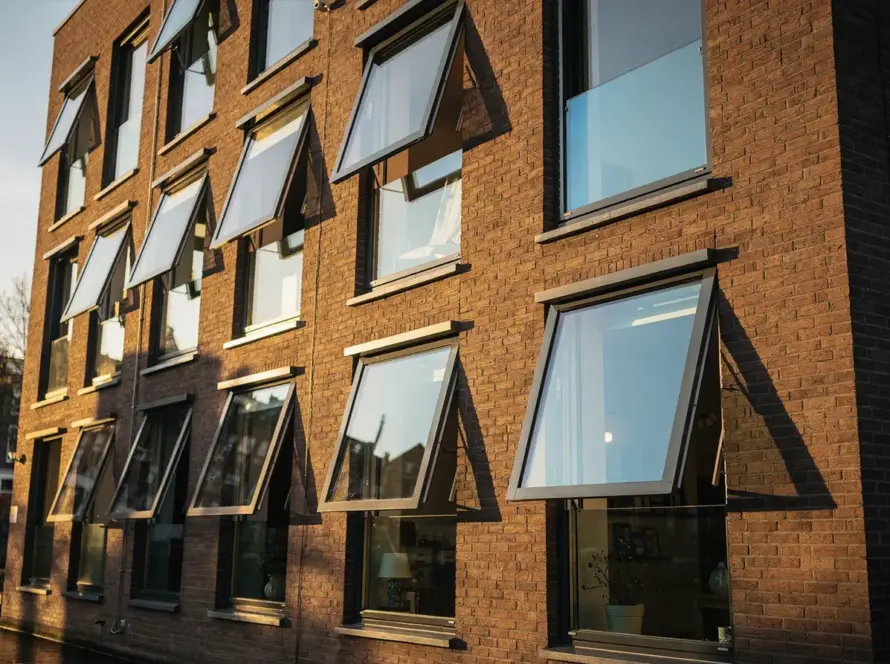
When you upgrade to triple glazing, the existing ventilation must be re‑evaluated. If your home relied on window leakage, that margin is gone. Trickle vents integrated into the new frames are a minimum; select self‑regulating models that react to humidity or wind pressure. In a deep renovation, consider retiring an aged exhaust‑only fan and installing demand‑controlled mechanical ventilation with CO₂ or humidity sensors. These systems boost extraction only when needed, saving energy and maintaining comfort. The best‑case scenario is balanced ventilation with heat recovery: it decouples air quality from weather, delivers filtered, pre‑warmed air, and eliminates condensation risk on triple‑glazed frames. Commissioning the whole package—windows, insulation, and ventilation—as one system prevents the common post‑renovation stuffiness.
Practical Tips for a Healthy Home
- Audit before you insulate. Engage a ventilation specialist to measure existing air change rates and design a system sized to your floor area, in line with the Bouwbesluit’s minimum 0.7 dm³/s per m² for living zones.
- Install humidity‑triggered trickle vents in every habitable room if you keep natural supply. They open only when indoor moisture rises, preserving thermal comfort.
- Upgrade to mechanical extract with two‑speed or infinitely variable fans in wet rooms. Run them on a timer for at least one hour after showers and cooking.
- Add CO₂ monitors in the main living area and bedrooms. Let them automatically boost your ventilation, keeping levels below 1000 ppm while minimising heat loss.
- Maintain the system. Clean heat‑recovery filters every three months, wash extract grilles, and keep outdoor intake grilles free of leaves and insects.
- Keep air paths open. Undercut internal doors by 1.5 cm or install transfer grilles so air flows from dry rooms to wet extract points without obstruction.
- Monitor humidity. Place inexpensive hygrometers in problem corners; aim for 40–60 %. If readings stay high, increase the continuous ventilation rate.
- Check for frame condensation. If dew appears on triple‑glazed frames after installation, inspect for thermal bridges and ensure the trickle vent is open or the HRV supply is balanced.
Conclusion
Triple glazing is a sterling investment in Dutch energy performance, but it must be paired with equally deliberate ventilation. Left to chance, airtightness turns a cosy renovation into a humid, unhealthy box. By integrating mechanical supply-and-extract or demand-controlled systems, you preserve every kilowatt-hour you save without sacrificing the crisp, healthy air you deserve. Next time you plan a home upgrade, treat airflow and insulation as one—the stuffy alternative is simply not worth the compromise.